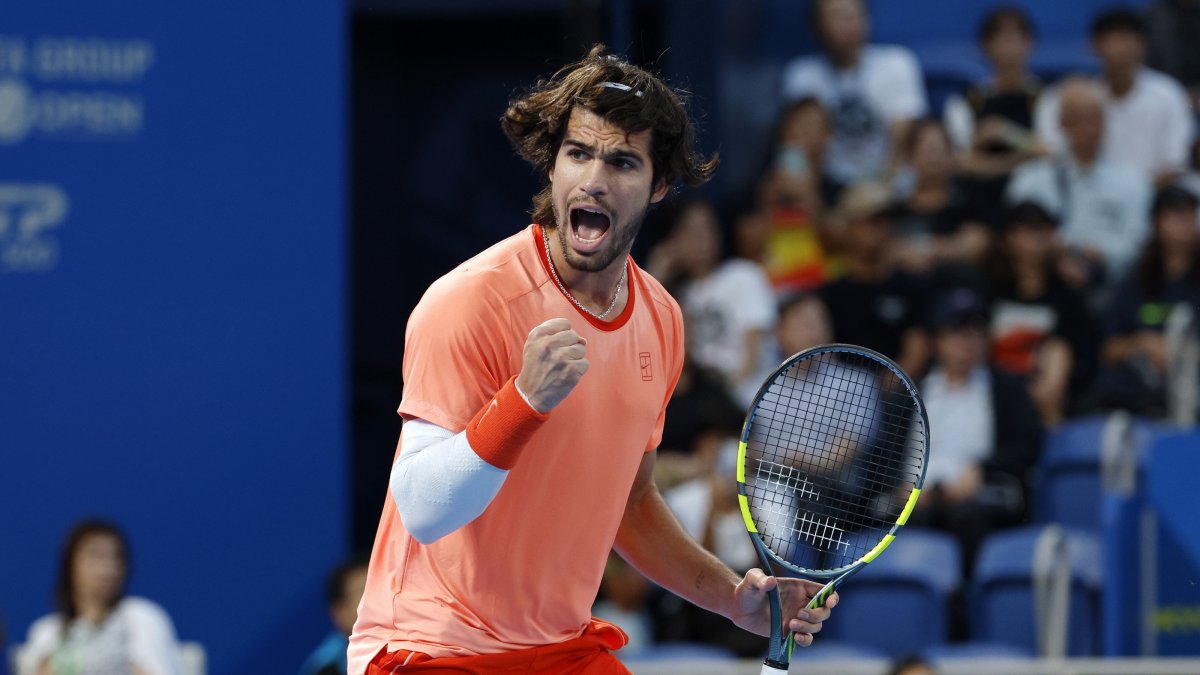
Carlos Alcaraz, the world No. 3, has expressed support for maintaining the best-of-five sets format in Grand Slam tournaments, emphasizing that shortening matches would diminish the tradition and uniqueness of tennis's major events.
Read More
Alcaraz highlighted the need to address the increasingly strenuous tour calendar instead, as concerns over player workload and late match finishes rise. This discussion gained traction during last month’s U.S. Open when his quarterfinal match against Ben Shelton concluded at 3:33 a.m. Since then, he has advocated for measures to prevent such late finishes in the future.
While speaking at the Japan Open on Wednesday, Alcaraz articulated his stance that changing the Grand Slam format is not a viable solution. He asserted that best-of-five matches are integral to the identity of the four major tournaments, advocating for improvements in tournament scheduling over any changes to the match format.
“The beauty of the Grand Slams is playing best-of-five sets. If we take that away and switch to best-of-three, we’re jeopardizing the legacy of the Grand Slams,” Alcaraz told reporters in Tokyo. He emphasized that the tradition of best-of-five sets has been a hallmark since the inception of the Grand Slams and should remain unchanged.
Various opinions have emerged, with Novak Djokovic suggesting best-of-three matches in early rounds of Grand Slams. Additionally, Andrew Abdo, the new Tennis Australia chief, mentioned at the Sport NXT conference the possibility of exploring alternative formats or scoring systems for the majors. However, the Australian Open later clarified its commitment to the five-set format, declaring that it is “here to stay” and promising more information ahead of the 2027 tournament.
The four Grand Slam events have initiated closer engagement with players through a newly established Player Advisory Council aimed at addressing concerns over player welfare and compensation, which have been raised in recent months. Although the membership of this council has not been officially announced, reports indicate that prominent players like Djokovic, Elena Rybakina, and Aryna Sabalenka are involved, while Alcaraz and top-ranked Jannik Sinner are not.
Focusing on the tour calendar, Alcaraz noted it should be reformed to relieve the intensity of the 11-month schedule, particularly after he experienced a near five-month injury layoff before returning to compete in New York.
“I’ve always said that it has to change,” Alcaraz stated regarding the calendar. He suggested that playing fewer tournaments consecutively would be beneficial, advocating for a reduction in the number of back-to-back events. The ATP has yet to respond to inquiries about these matters, but its chairman Andrea Gaudenzi defended the current calendar last year, stating that players have the choice in scheduling and that incentives are being developed to manage the number of matches played throughout the season.