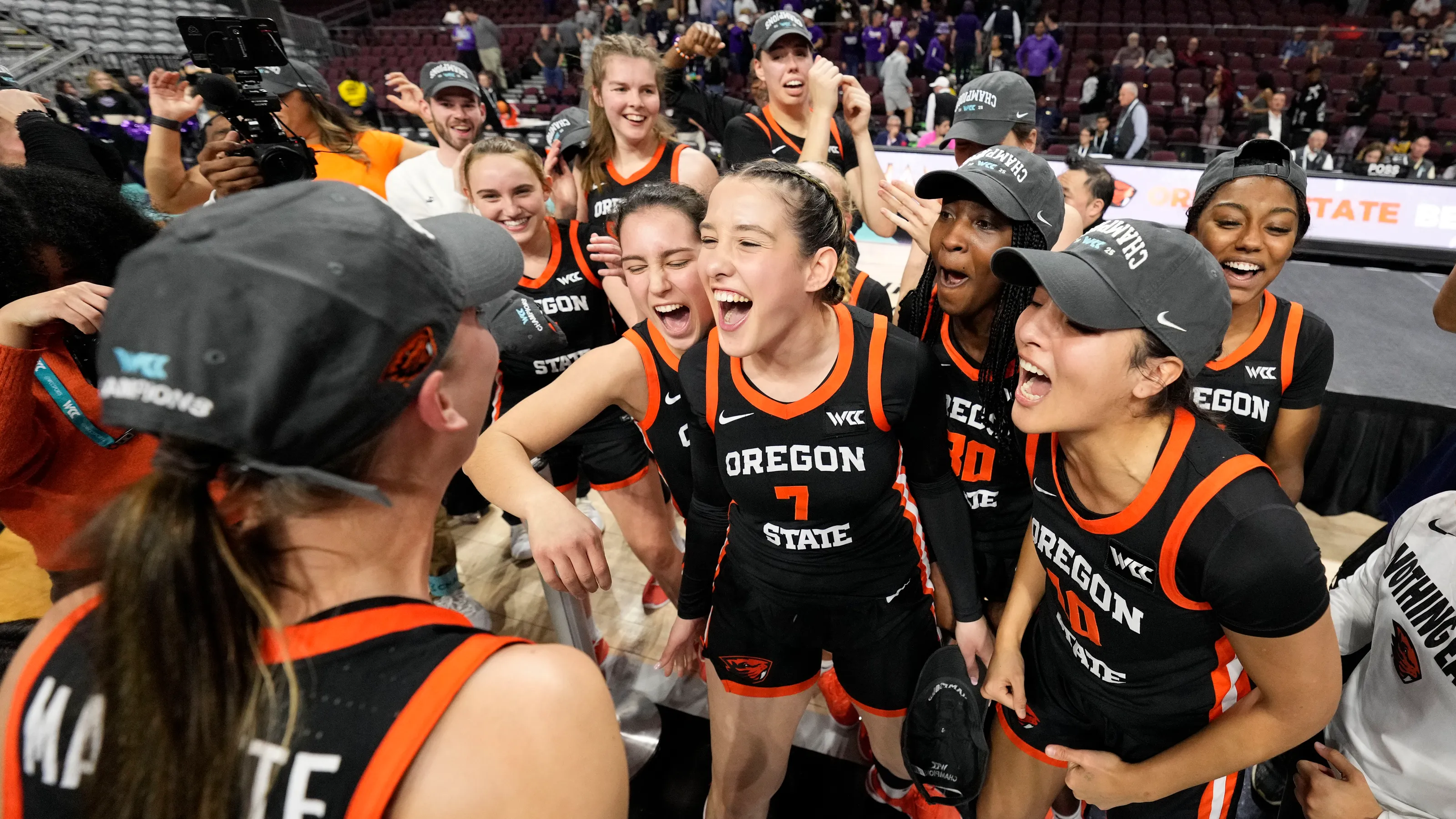
A crucial hearing is set to take place in Oregon this week, which may significantly influence the future of college athletics. The Oregon Employment Relations Board will assess a petition filed by members of the Oregon State women's basketball team, seeking permission to form a workers’ union as university employees. This hearing is scheduled for Monday, September 14, at 11 a.m. PT in Salem, Oregon.
Read More
The petition for union representation, submitted in late July, marks a historic effort for collective bargaining rights under Oregon state law. It is the first time a group of women college athletes has formally pursued recognition as a players’ union. Unlike previous initiatives by male athletes at institutions like Northwestern and Stanford, this case involves a public university, meaning that the decision will hinge on state law rather than federal regulations.
Katelyn S. Oldham, an attorney representing the Oregon State women’s basketball team through the United College Athletes Association (UCAA), noted that over 100 women’s college basketball players have already signed union authorization cards, including senior guard Jenna Villa. Alongside her, Mikayla Pivec, a former Oregon State player, is a co-founder of the UCAA.
Oluchi Okananwa, an All-Big Ten women’s basketball player at Maryland and interim president of the UCAA, expressed the group's aspirations in July: “We the players deserve more than promises. We deserve a seat at the table, meaningful protections, fair compensation, and a collective bargaining agreement that raises the standard for everyone.”
According to the UCAA, ten out of the 13 current Oregon State players have signed union cards. They argue that since the players receive compensation for their contributions to the university and pay taxes on that income, they qualify as public employees under Oregon law. The UCAA claims that Oregon State compensates its women’s basketball players a total of $543,000 annually for their roles as athletes.
In their response to the petition, attorneys for UCAA have stated that the university treats its women’s basketball team as a commercial enterprise, profiting from spectator attendance while maintaining that the players are not employees. Despite the NCAA's longstanding position that student-athletes are not employees, the UCAA contends this contradicts the university’s actions.
Oregon State’s legal team responded by asserting that the petition seeks to classify student-athletes as employees and to certify a single team for bargaining—a request they argue has never been granted by any court or agency. Oregon State maintains that financial aid and Name, Image, and Likeness (NIL) agreements should not be considered wages, arguing these elements are “irrelevant” to the case.
The hearing will also feature testimonies from several high-ranking officials at Oregon State, including Provost and Executive Vice President Roy Haggerty. The Oregon Employment Relations Board comprises three members appointed by the governor and confirmed by the state Senate—currently all from the Democratic Party.
Any decision by the board to recognize the women’s basketball players as employees could have far-reaching implications, potentially affecting various aspects of labor law, immigration, tax policy, Title IX compliance, and competitive dynamics among public and private institutions nationwide.