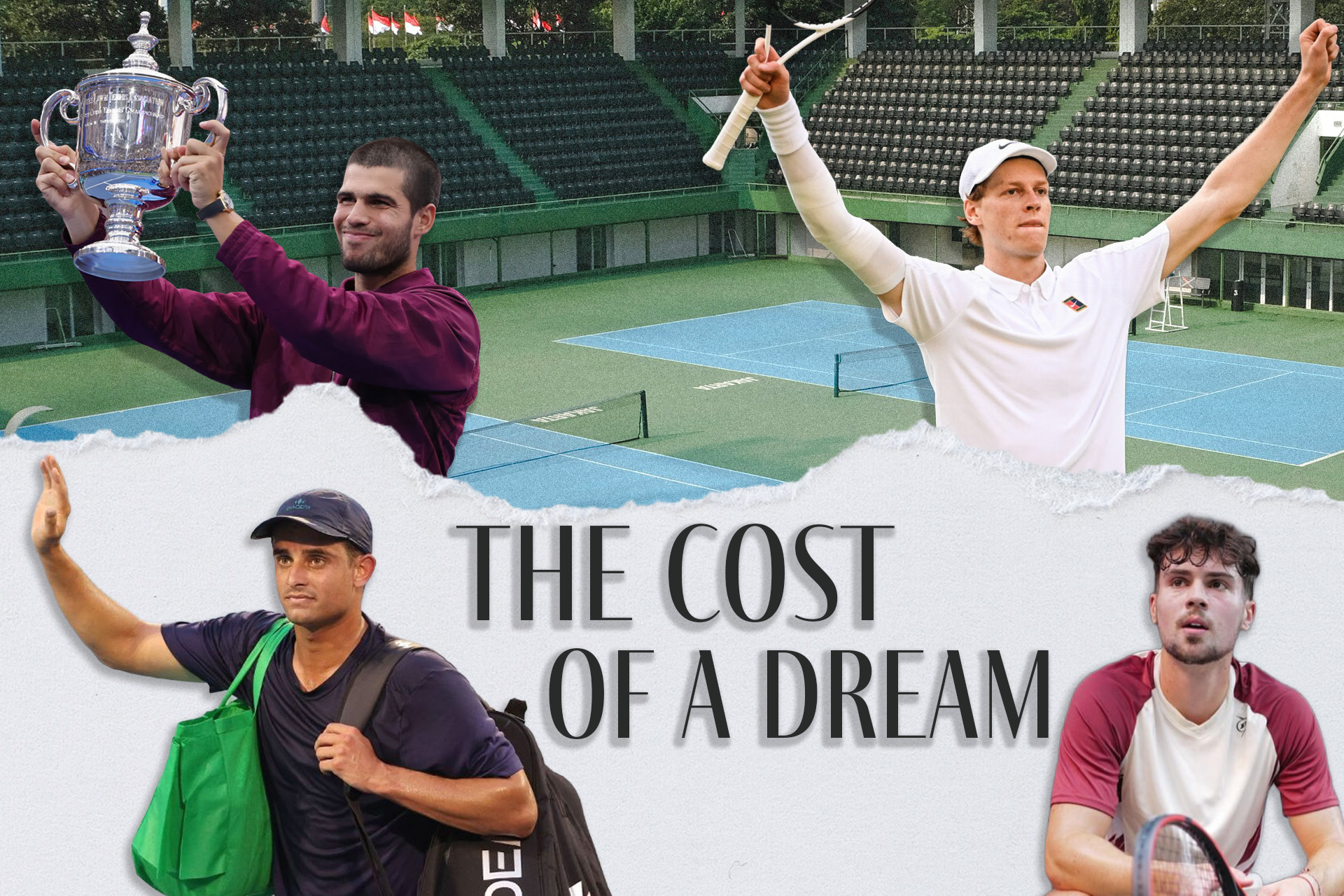
Watching professional tennis might create the illusion of a glamorous career, but the reality is quite stark. While major tournaments like the four Grand Slams showcase 128 men and 128 women in singles competitions, countless professionals compete in smaller events around the world for much lower stakes.
Read More
Professional tennis is one of the most financially challenging sports to pursue. Unlike team sports, turning pro does not guarantee a stable income. Players cover their own expenses, including flights, hotels, meals, and transportation. They also incur costs for equipment like rackets, strings, and shoes, in addition to physical fitness and coaching fees.
Top players like Carlos Alcaraz and Jannik Sinner have significant support teams at their matches, allowing them to afford higher coaching fees. However, lower-ranked players struggle to provide similar resources due to financial constraints. Bringing a coach to a tournament not only involves paying the coach but also additional travel costs.
The prize money at major tennis tournaments can be misleading. For instance, in 2026, the U.S. Open offered record-breaking total prize money. However, a report by the Michigan Journal of Economics highlighted that the top 50 players earned 60% of the $162 million men’s prize-money pool, leaving many others to compete for the remaining amount while incurring the same expenses.
Even achieving a spot in the top 100 does not guarantee financial security, as players need continuous earning to maintain their rankings. Injuries can further complicate their financial situations.
Felix Mischker shares his journey as a professional player on his YouTube channel, Tennis Brothers. In 2023, he earned a single ATP ranking point at an International Tennis Federation tournament, which did not cover his expenses. His YouTube earnings provide some financial relief, a luxury many lower-level players lack.
Kiranpal Pannu faced severe financial difficulties despite his talent, earning only $6,771 in prize money in 2022 while spending around $34,500, primarily on travel. He sought to lower costs by sharing accommodations and took on temporary coaching jobs, ultimately left with a deficit of over $27,000.
Andrey Rublev, despite his $7.7 million in career earnings, expressed similar concerns. He noted the financial strain of maintaining his team during a five-month hiatus due to COVID-19, emphasizing that tennis can be an expensive sport.
In contrast to major team sports, where organizations provide essential infrastructure once an athlete joins a roster, professional tennis players function more independently, juggling their roles as athletes and business owners. While top players enjoy millions in earnings, for many, financial strain complicates the path to success.
Ultimately, the distinction in resources can significantly affect players' opportunities. Two equally talented individuals may face vastly different realities based on their financial backing. Becoming a professional in tennis often reveals the high costs associated with pursuing a passion, rather than a clear path to success.