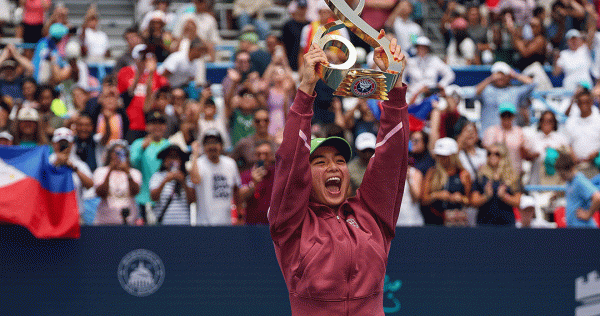
Alexandra Eala's victory at the South East Asian (SEA) Games last December garnered significant attention, marking a resurgence of women's tennis in the region. The 20-year-old from The Philippines won gold, drawing parallels to the era of Thai player Tamarine Tanasugarn, who was a top-20 player in the mid-1990s. Despite not being ranked in the top 30 globally, Eala's achievement resonated in her home country, where tennis fame is paramount.
Read More
Following her win, Eala emphasized the significance of the SEA Games in South-East Asia, stating that it represents a dream for many young athletes in the region. Unbeknownst to many, the medals awarded at the SEA Games were just the beginning for Eala and her peers, as they recently made notable impacts at Wimbledon. Alongside Eala, Thailand's Mananchaya Sawangkaew and Indonesia's Janice Tjen also reached the second round of the tournament, reflecting the growing competitiveness of South-East Asian tennis.
Sawangkaew, who earned silver at the SEA Games, completed a remarkable journey by reaching the third round at Wimbledon, marking her as the first Thai woman to achieve this feat since 2008. She credited her success to competing against talented players like Eala and Tjen, saying it motivated her to improve.
For Eala, her standout performance at Wimbledon included a significant victory over reigning champion Iga Swiatek during her Centre Court debut, progressing to the fourth round before losing to former finalist Jasmine Paolini. Eala noted the importance of maintaining a strong work ethic and the inspiration she aims to provide to others from her efforts.
The success of these athletes at Wimbledon highlighted a shift in the competitive landscape of tennis. While the United States has maintained its dominance, a new wave of talent from Italy and Czechia, including several seeded players, is becoming increasingly prominent.
Both Sawangkaew and Lanlana Tararudee continued their momentum post-Wimbledon, with Sawangkaew nearing the top 100 following a semifinal appearance in Newport, and Tararudee capturing her second title in Istanbul. This collective success of South-East Asian women at international tournaments signals a promising future for the sport in the region.