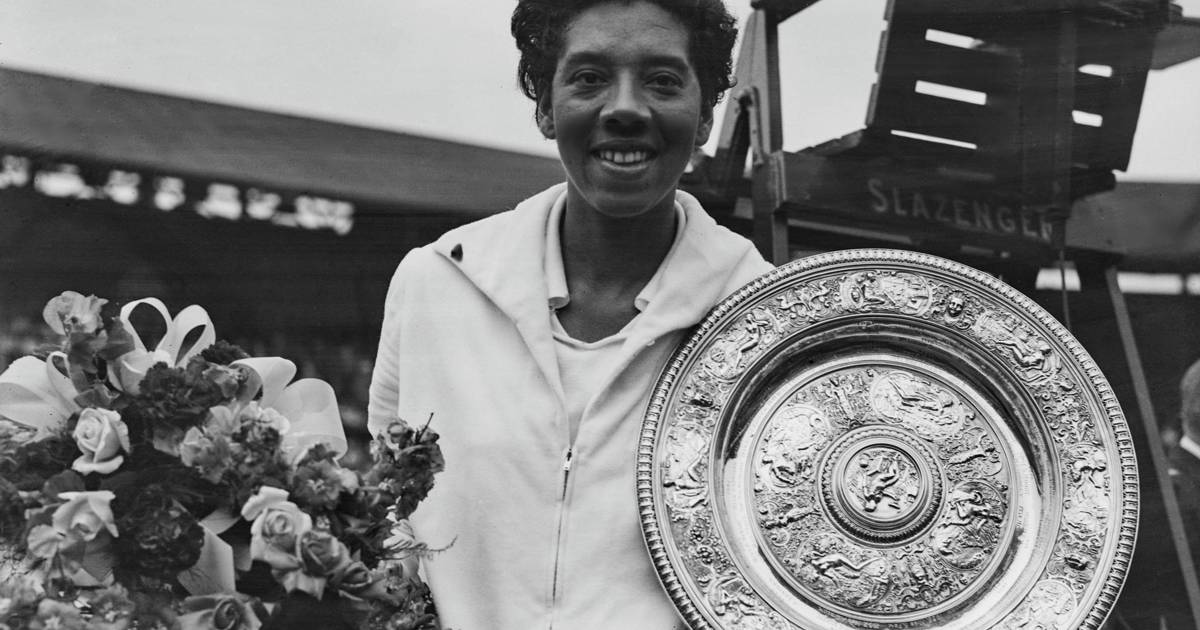
Althea Gibson made history as the first Black woman to win Wimbledon in 1957, a milestone that continues to resonate nearly 70 years later. As we observe Black History Month, her legacy remains a source of inspiration for emerging players in the sport.
Read More
Gibson's achievements paved the way for future tennis champions like Serena and Venus Williams, significantly altering the landscape of tennis both in Britain and globally. She claimed her first Grand Slam title just six months after Rosa Parks’ historic refusal to give up her bus seat in Alabama, highlighting her role in the fight against racial discrimination.
Former British No.1 Heather Watson emphasized Gibson's influence, stating, "Althea Gibson’s legacy is deeply inspiring because she proved what was possible when the doors were completely shut. As we mark Black History Month, it’s so important to shine a light on her influence." Watson noted that Gibson didn’t just win titles; she established a path for future players of color to compete authentically.
Born in Silver, South Carolina in 1927, Gibson’s family moved to New York City when she was three. She initially competed in the predominantly Black ATA Championships and gained entry to the National Championships at Forest Hills in 1950 after fellow player Alice Marble criticized the USLTA's color restrictions. The following year, she became the first Black woman to compete at Wimbledon, and in 1956, she won her first Grand Slam title at Roland Garros.
Later that summer, she won the Wimbledon ladies’ doubles title with Britain’s Angela Buxton, forming a lasting friendship despite their different backgrounds. Gibson returned to Wimbledon in 1957 to capture the singles title without dropping a set, becoming the first champion to receive the trophy from Queen Elizabeth II. Reflecting on her journey, she described the moment as a stark contrast to her past experiences of discrimination.
Gibson earned a ticker-tape parade in New York and subsequent recognition as American Female Athlete of the Year. Known for her powerful serve and aggressive style, she won a total of 11 Grand Slam titles: five in singles, five in ladies’ doubles, and one in mixed doubles. After her tennis career, she ventured into other entertainment realms, including an album and television appearances, and became the first Black woman to join the LPGA golf tour in 1963.
Gibson faced difficult times in the 1990s, but her friend Buxton assisted in funding her medical care. Following Gibson’s death in 2003, her contributions to the sport were honored with a statue at Flushing Meadows in 2019.
Billie Jean King remarked on Gibson’s profound impact, stating that her accomplishments made it easier for athletes like Arthur Ashe and others who followed. Yasmin Clarke, a former elite player, recalled how Gibson inspired new generations to view tennis as a viable path for success. Clarke now serves on the LTA Board and advocates for ongoing diversity efforts within the sport.
Anne Keothavong, captain of the Billie Jean King Cup, noted the progress made in diversifying tennis in the UK, linking it to the contributions of the Williams sisters. Clarke expressed optimism for the future, stating, "Ultimately, I’d love us to reach a point where someone’s background is never a barrier to what they can achieve in tennis."
The legacy of Althea Gibson continues to be a guiding light for the tennis community, emphasizing the importance of diversity and inclusion.