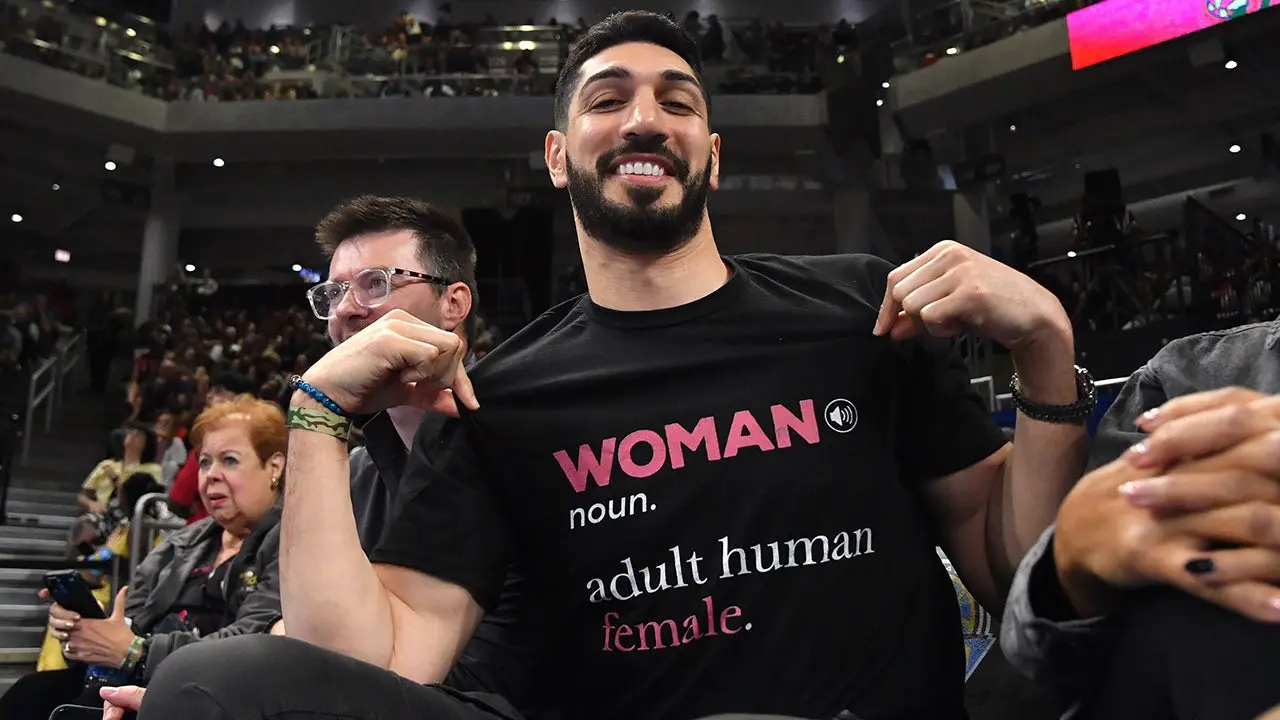
WNBA Commissioner Cathy Engelbert informed Republican lawmakers that former NBA players Enes Kanter Freedom and Royce White are deemed ineligible to compete in the league, affirming they are "both men." This statement came in a letter dated October 16 and was shared by the America First Policy Institute (AFPI), which represents Freedom. The response addressed a September 17 inquiry from Rep. Marlin Stutzman, R-Ind., and four other House Republicans, who sought clarification on player eligibility, safety, and incidents involving fans.
Read More
Freedom and White had previously announced intentions to enter the 2027 WNBA Draft, asserting they identify as women. Engelbert's letter stated that the WNBA's eligibility criteria, as outlined in Article XIII, Section 1(a) of its collective bargaining agreement, specifies that only women can play in the league, though it does not define "women" itself. Stutzman welcomed Engelbert's clarification as a recognition of biological distinction, stating that it marked the WNBA's first step toward defining what a woman is within the sports community.
Engelbert's correspondence did not introduce any new eligibility rules or broader policies regarding transgender athletes. In response to the letter, Freedom expressed concern that it failed to clarify the standards the WNBA uses to determine eligibility. He criticized Engelbert for misgendering him and questioned who holds the authority to define someone's gender. Freedom also stated that his intent to join the league is part of a larger quest for clarity on eligibility criteria, arguing that the definitions of identity and eligibility may require different considerations.
The eligibility debate became more prominent after Indiana Fever guard Sophie Cunningham publicly supported excluding transgender girls and women from female sports, igniting varying reactions among fans and players. Freedom cited Golden State Valkyries player Gabby Williams' advocacy for transgender athletes as motivation for his own efforts to enter the league.
In August, a league task force discussed issues surrounding transgender participation and online abuse targeting players. Engelbert had indicated that there were no immediate eligibility concerns and condemned attempts to use the debate to harm others. Freedom questioned Engelbert's definitive stance given the ongoing discussions within the task force regarding eligibility.
Beyond eligibility, lawmakers had questioned the WNBA's handling of incidents involving player behavior and spectator interactions. Engelbert defended the league's officiating and disciplinary processes but did not clarify why Sky guard Natasha Cloud faced no repercussions for her confrontation with Freedom, while Seattle Storm co-owner Celeste Keaton received a suspension for a separate incident.
Freedom was ejected from the August 23 game against the Fever and subsequently banned from Sky home games. He has since filed a lawsuit claiming his First Amendment rights were violated, which Chicago Sky owner Michael Alter disputed, stating that Freedom was removed due to his conduct.
Stutzman also expressed concerns regarding the WNBA's respect for the national anthem, particularly after players from the Atlanta Dream and Golden State Valkyries left the court during the anthem in the opening games of the WNBA Finals. Engelbert concluded her letter by reaffirming the league's commitment to protecting players and addressing online harassment.
With Engelbert set to retire at the end of 2026, Freedom has indicated he will continue pursuing a place in the league unless the eligibility rules change. He believes adding the term "biological" before "female" would resolve the issue and called for consistency in policy. Freedom emphasized the need for the WNBA to clearly explain the eligibility criteria they enforce.