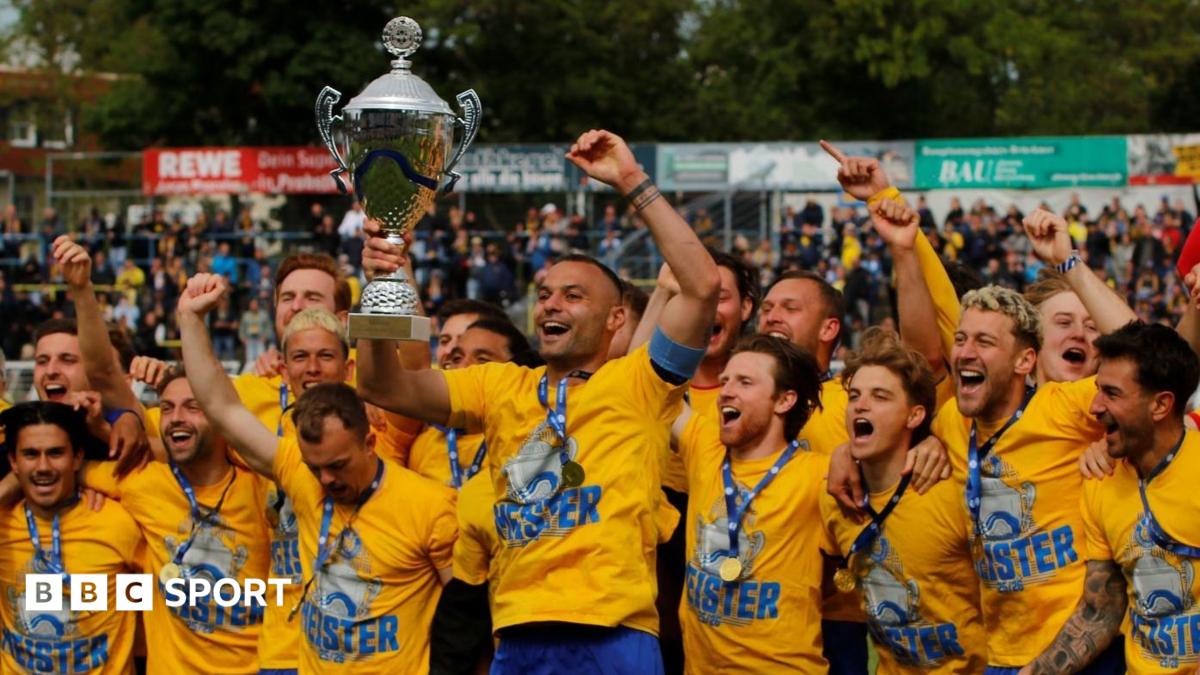
Djamal Ziane, captain of Lokomotive Leipzig, has lifted the trophy as the champion of the Regional League Northeast three times, but his joy is overshadowed by a frustrating reality. For the second consecutive year and third time in seven seasons, Lokomotive's title did not secure promotion to the 3. Liga. This summer, Ziane led his team to victory, yet a playoff against Wurzburger Kickers resulted in a 3-1 aggregate loss, leaving them without a spot in the next tier.
Read More
"Euer System ist krank," or "your system is sick," read a rallying banner from 2,000 traveling fans. Ziane expressed disillusionment to BBC Sport, stating, "It doesn't make any sense. If they really wanted to change it, they could do tomorrow." However, the complexities of Germany's football hierarchy present a bottleneck. The fourth tier is divided into five regional leagues, each producing a champion. Yet, with only four relegation spots from the 3. Liga, conflicts arise.
Currently, champions from the West and Southwest leagues earn automatic promotion, while the third spot rotates among the remaining leagues in a three-year cycle, culminating in a playoff for one champion. This system has negatively impacted teams from the Regional League Northeast, often leaving them sidelined.
In 2022 and 2023, other former GDR teams faced similar setbacks, further highlighting an imbalance. The current promotion failures are interlinked with socio-economic disparities between eastern and western Germany. Despite these challenges, the Northeast league boasts significant attendance figures, with Lok Leipzig averaging 6,352 fans.
Executive Toni Wachsmuth pointed out that despite having a strong crowd base and a rich history, clubs from the east struggle without the financial backing found in the west. This reality has sparked a movement in the east, pushing for reforms under the slogan "Meister müssen aufsteigen!" — champions must go up.
The proposed changes call for consolidating the leagues from five to four, employing artificial intelligence to determine regional boundaries and streamline travel. Campaign leader Tommy Haeder emphasized that generational shifts in leadership may pave the way for an end to the east-west debate.
Support for the initiative has grown, drawing interest from over 80 clubs nationwide, including Bundesliga teams like Union Berlin, which recently voiced endorsement for the reforms. Borussia Dortmund president Hans-Joachim Watzke and Bournemouth coach Marco Rose have echoed calls for a more equitable promotion system.
Despite a favorable vote in June for the proposed compass model, complications arose when two last-minute changes were introduced, reducing team numbers and requiring majority support from all five regions for implementation. While a majority favoring the model was achieved, dissent persisted in the Southwest, leading to calls for further discussions.
The lack of progress has sparked protests at matches across the leagues, with fans demonstrating their frustrations. On the season's opening day, Lok Leipzig fans symbolically threw plastic trophies onto the pitch, lamenting their perceived disenfranchisement in the system. Other protests, including choreographed displays by Bayern Munich's ultras and coordinated messages from Bundesliga fans, reflect a growing demand for reform in the promotion structure.