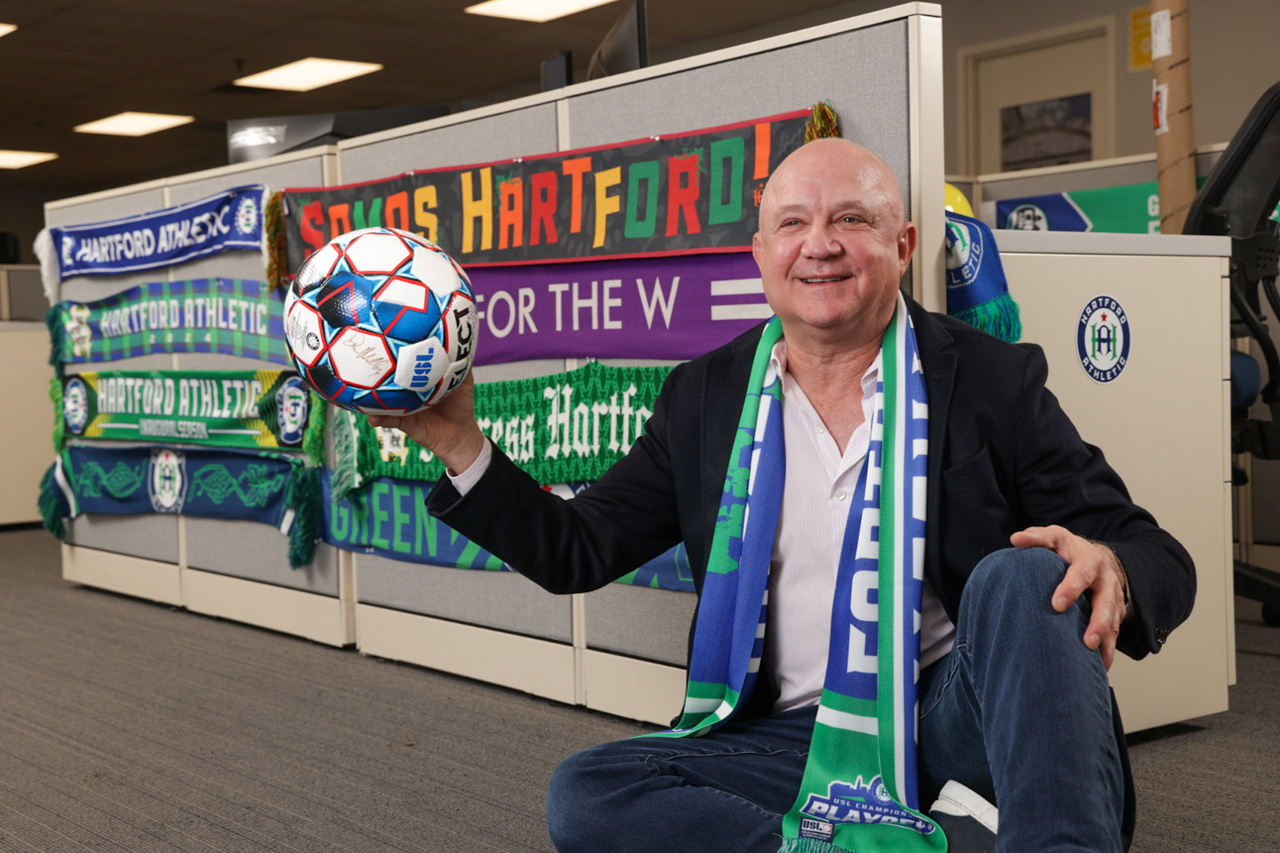
Hartford Athletic is evaluating a renovation of Trinity Health Stadium, which may include adding thousands of seats and creating additional amenities, as part of efforts to boost revenue and aim for higher league status.
Read More
Chairman Bruce Mandell highlighted that attendance drops by 75% on rainy days, resulting in significant economic loss not only for the club but also for the city and state. As a solution, the proposed renovations include a roof to protect spectators, ensuring that the playing field remains open.
Other potential upgrades involve increasing the stadium's capacity by adding 2,000 to 2,500 seats and enhancing the suite levels, potentially incorporating a full-service kitchen which is currently lacking.
The proposal is in its preliminary stages, lacking a cost estimate or funding strategy. Any major renovations to the city-owned stadium will likely require public funding, an issue Mayor Arunan Arulampalam acknowledged, emphasizing the need to assess benefits against other city priorities.
Hartford Athletic is also considering moving to the United Soccer League's highest division as the USL prepares to launch USL Premier, a Division I men’s league, in 2028. Currently, Hartford plays in the USL Championship division and has received an invitation to apply for the new league. However, the stadium's current seating falls short of U.S. Soccer’s 15,000-seat requirement for Division I clubs.
Mandell remains focused on improving fan experiences regardless of league changes, noting that venues like Louisville’s Lynn Family Stadium have proven successful in providing fan comfort. He maintains that planning is still in the exploratory phase, with expectations for cost estimates and visual plans within two months to present to local stakeholders.
The city owns the stadium, originally opened in 1935, which underwent a $14 million renovation in 2019 after years of deterioration. During that renovation, the state provided $10 million in bond funding, with additional financing from Mandell's ownership group and the Greater Hartford Gives Foundation.
Mandell suggests that a significant renovation could cost considerably more than the previous upgrade, estimating that today's costs for similar projects would start at $25 million to $30 million, necessitating public investment alongside contributions from the club.
Despite ongoing financial challenges—Hartford Athletic has yet to turn a profit since its founding in 2019—Mandell sees potential for improvement. Ticket sales and associated revenues constitute 60% of income, while corporate sponsorships account for the remaining 40%. He cites the importance of increasing seating capacity given current flat attendance figures.
A notable positive has come from the club’s new women’s team, which turned a profit in its first season. Additionally, upcoming sponsorship opportunities following the expiration of existing deals seem promising, as seven companies have expressed interest.
The club's performance has attracted attention, recently winning the 2025 USL Jägermeister Cup, marking its first championship. National exposure from televised matches has been instrumental in enhancing sponsorship pitches.
Mandell sees a potential route for growth through league promotion, citing parallels with European soccer teams that have benefited from climbing divisions. He is optimistic about presenting the case for stadium investment once detailed plans are established, framing the project as a community initiative.