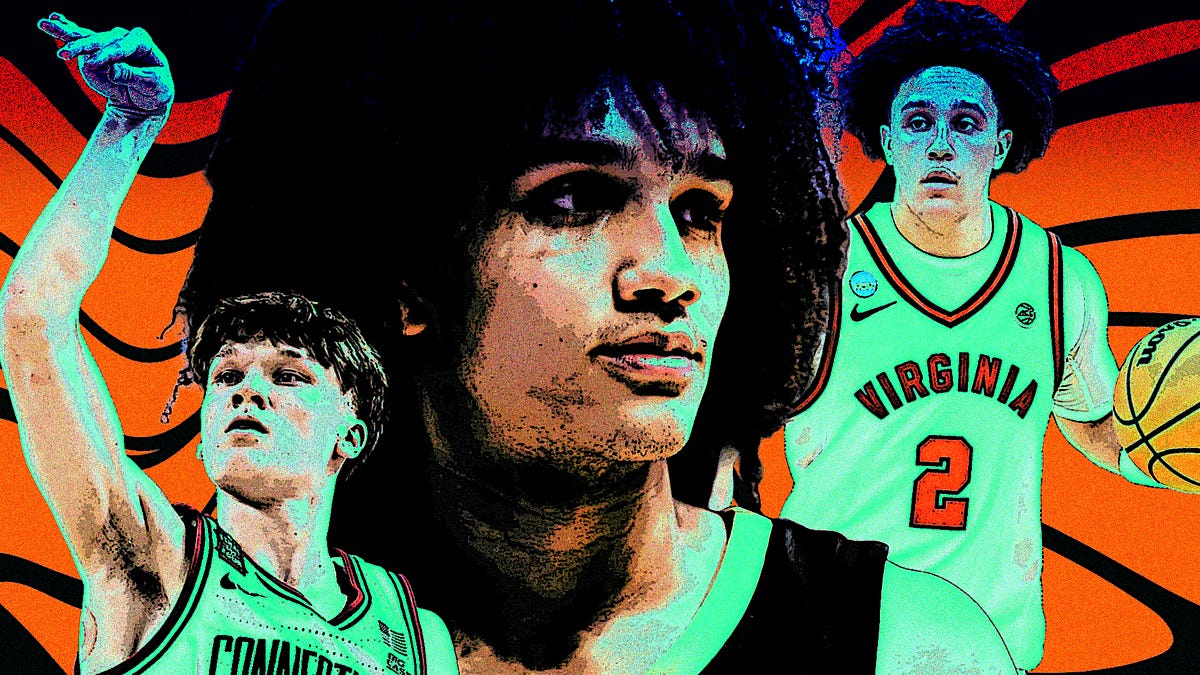
The 2027 NBA Draft features a promising group of guards, with notable prospects including Darryn Peterson, Keaton Wagler, Darius Acuff, Mikel Brown, Kingston Flemings, and Brayden Burries. This year's guard class is seen as especially competitive, particularly following the disappointing draft outcomes for last year's offensive talents like Bennett Stirtz and Ebuka Okorie. With several intriguing prospects ready to assert themselves, returning players will need to significantly raise their draft statuses ahead of the June selection.
Read More
Tyler Tanner, who returned to school after being viewed as a potential top-10 pick in the 2026 draft, must prioritize gaining weight. He measured 167 pounds at the combine, which is well below the average for successful NBA guards. While Vanderbilt lists him at 181 pounds, if confirmed, this increase would enhance his defensive capabilities and overall appeal. He can create scoring opportunities but needs to refine his half-court game, particularly his shooting efficiency from three-point range (34.7%) and floater effectiveness (26.3%).
Chance Mallory and Nigel James Jr. complete the trio of noteworthy small guards, both sharing Tanner's strengths but each with distinct areas for improvement. Mallory, known for his combination of guard skills and physicality, struggled at the rim last season, hitting just 56% on attempts within the paint. He must enhance his three-point shooting (currently at 34.5%) and improve his scoring consistency. James, who is more physical and athletic, needs to finish better around the basket and bolster his shooting from beyond the arc (28.9% last season).
Braylon Mullins entered the 2025-2026 season projected as a lottery pick but an ankle injury hindered his performance. Despite being an elite shooter with a previous season average of 44.3% from three, he saw a significant drop to 33.5%. To regain status as a top prospect, he must demonstrate versatility beyond shooting, particularly in creating his own shots.
Trey Mckenney was a key contributor for the Wolverines, excelling as a shooter at 39.1% from three and 89.5% from the free-throw line. However, he must step up as a playmaker to elevate his draft stock. His current role relies heavily on assisted shots, and Mckenney will need to show he can create offense independently.
Jeremy Fears Jr. had a historic season with a remarkable assist percentage of 53%, but his shooting stats raise concerns. He needs to boost his three-point attempts and improve overall efficiency to alleviate doubts about his scoring ability.
Cayden Boozer, often overshadowed by his twin brother, showed promise late in the season but needs to enlarge his offensive game, particularly his three-point shooting, which sits at 30.3%. He must also enhance his rebounding numbers.
Isaiah Johnson made a strong impact as a freshman, averaging 16.9 points with impressive efficiency. However, to cement his potential as an NBA player, he needs to ensure his skillset aligns with that of a point guard as he increases his assist volume.
Acaden Lewis stood out for his facilitating abilities but must improve his shooting efficiency outside the paint. His current numbers indicate a need for growth to solidify his status as a viable draft candidate.
Kayden Mingo shares some similarities with Lewis in terms of strengths and weaknesses. He must focus on improving his shooting touch, particularly from three-point range, while continuing to leverage his playmaking skills and defensive contributions. Overall, all these guards face a pivotal season ahead, requiring focused development to enhance their draft prospects.