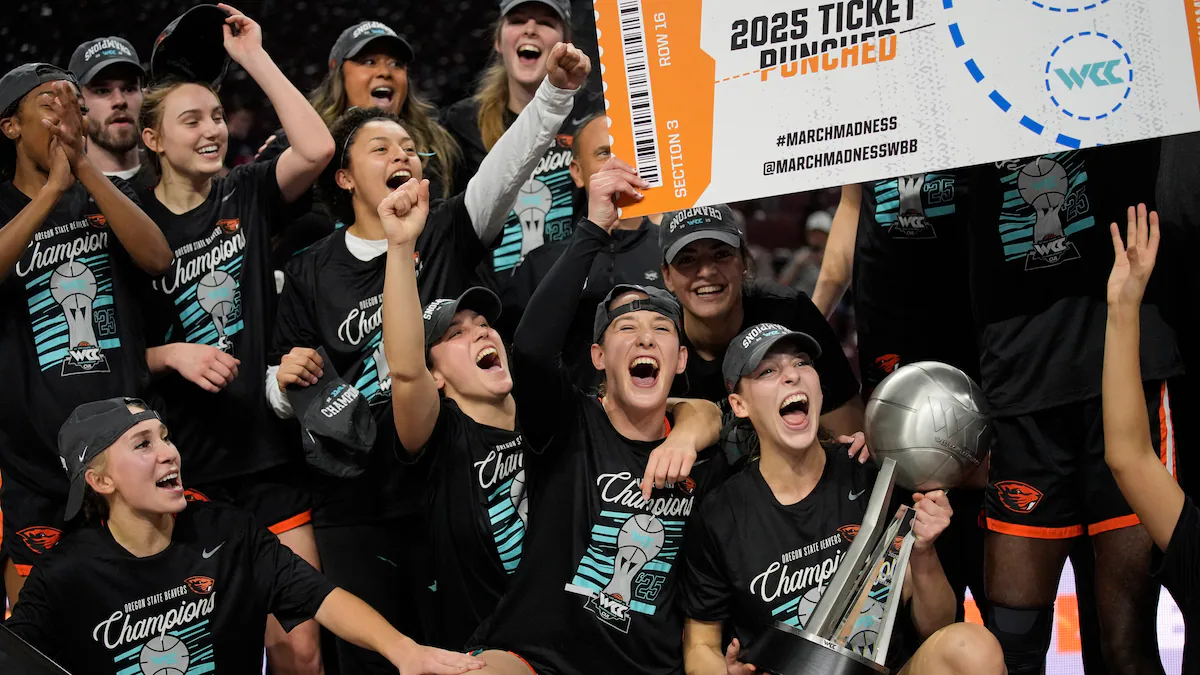
The Oregon Employment Relations Board is evaluating whether members of Oregon State University’s (OSU) women’s basketball team should be classified as employees with the right to unionize. This decision could have far-reaching implications across college athletics, following a trend that emerged after the U.S. Supreme Court allowed college athletes to receive compensation beyond scholarships five years ago.
Read More
During the first hearings held earlier this month in Corvallis, players presented their case to an administrative law judge, highlighting the significant disparity in compensation among college athletes. They argued that their commitment to the sport parallels paid employment. However, OSU representatives contended that the athletes are students participating in basketball as part of their educational journey, not for wages. OSU's provost, Roy Haggerty, stated that the university sponsors women’s basketball to help students reach their peak physical capabilities.
While OSU officials maintain that athletics enrich the college experience, the players pointed out that they already receive scholarships and stipends, as well as revenue-sharing for their name, image, and likeness. Jenna Villa, a sophomore shooting guard, expressed hope that being recognized as employees would lead to fair wages, healthcare benefits, and a stronger voice for athletes in decision-making processes.
The push for unionization at OSU mirrors broader calls in college sports for defining athletes’ employment status. The NCAA continues to uphold that student-athletes are not employees and thus cannot engage in collective bargaining. Meanwhile, growing support from athletes, coaches, lawmakers, and professional sports unions underscores the demand for protections like union negotiating rights amid a rapidly evolving sports industry.
Mackenzie Shivers, a junior guard for OSU, articulated the challenges faced by athletes, especially in terms of health coverage for injuries. Shivers, along with Villa and seven other teammates, signed the unionization petition, which requests representation by the United College Athletes Association (UCAA), co-founded by former OSU player Mikayla Pivec. This national initiative has gathered support from over 100 players, labor groups, and professional athlete unions.
In response to the petition, OSU objected, asserting that basketball participation is not service performed for hire and that athletes enroll primarily for education. This objection has initiated a drawn-out evaluation process by the state’s employment relations board. Further hearings are scheduled for October, where OSU athletics staff will provide testimony. The administrative law judge will then prepare recommendations for the three-member Oregon Employment Relations Board, which can affirm or contest the judge's findings.
The timeline for a decision could extend to December, but any ruling will likely face legal challenges, potentially leading the case to the Oregon Court of Appeals. Unlike previous unionization attempts at private colleges, this case is unique in seeking public employee status due to OSU being a public university. Legal experts warn that recognizing athletes as employees could raise numerous complex questions regarding worker rights, sick leave, and international student treatment, impacting Oregon’s public colleges and universities significantly.