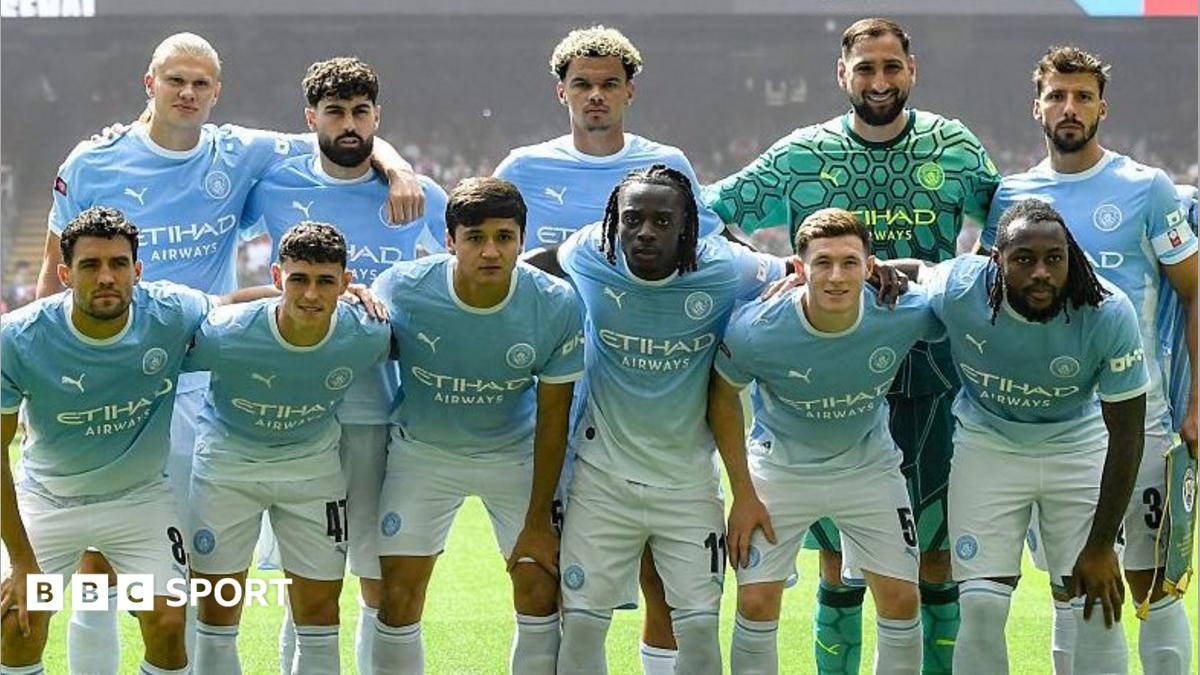
Manchester City has turned to an extensive data operation to inform its player recruitment strategies, encapsulated by the phrase, "What does it take to win?" This approach involves identifying players, evaluating their performances, and assessing how they might improve within City's system, all aimed at increasing the likelihood of winning the Premier League. The data department projected that Arsenal would finish as champions last season, a prediction that proved correct. Although City is keeping this season's internal predictions confidential, their perfect start of five wins from five matches has led to expectations that they will again challenge Arsenal for the title.
Read More
The club's commitment to data analytics is a core component of its efforts to close the gap with Arsenal, and BBC Sport was granted exclusive insights into the data-driven strategies guiding player recruitment and transfers. City employs data to minimize risk in the transfer market, evaluating players on four key criteria: ability, overall characteristics, their current playing system, and their adaptation potential at City.
Since claiming the Treble in 2023, City has dramatically reshaped its squad, retaining only four players from that season. Despite the substantial influence of data, traditional scouting remains a vital aspect of the transfer process. Hugo Viana, City's sporting director, explained that while data informs decisions, it cannot fully capture a player's character or mentality. Scouts and specialists complement this data analysis to form a comprehensive picture of potential recruits.
City utilizes a database of 650,000 footballers worldwide to begin their recruitment process, narrowing down the field based on specific player profiles. For example, full-backs are categorized as defensive, inside playmakers, or those who engage in wide play. From this extensive database, a longlist of 20 to 50 players is created, often overlapping with scouts’ initial assessments. Further metrics help prioritize this list to a maximum of six candidates.
In-depth analysis follows, focusing on metrics like injury history, athletic performance, and behavioral habits, collated into acquisition packs for each player. These packs include specific on-field performance metrics and a player’s potential impact score, which estimates their future contribution.
City's data-driven method also extends to reactive measures, like monitoring the performance of players such as Yan Diomande and Eduardo Camavinga to remain agile in the market. A notable acquisition, Elliot Anderson, was acquired despite not initially standing out in data evaluations, thanks in part to traditional scouting insights.
The club's analytical rigor highlighted that Anderson's prior performance was affected by the style of Nottingham Forest, enabling City to project how he could thrive in their more possession-oriented setup. Similar scrutiny shaped decisions for players like Julian Alvarez and Abdukodir Khusanov, showing how the blend of data and scouting insights informs recruitment.
As City prepares for new challenges under manager Enzo Maresca, its data-driven approach remains firmly in place, rooted in a philosophy developed prior to Pep Guardiola's tenure. This transition aims to maintain the club's competitive edge while also planning for the future. With a focus on lowering the average age of the squad while remaining in contention for titles, City is navigating the complexities of rebuilding effectively.
Despite the growing reliance on analytics, the club's strategy emphasizes the importance of timing in player sales, identifying performance dips years in advance. The arrival of younger talents, such as Ayyoub Bouaddi, is part of a broader strategy to cultivate a squad capable of sustained success. Currently, City boasts one of the youngest squads in the Premier League, indicating a balance of youth and experience as they aim for continued success in the league.