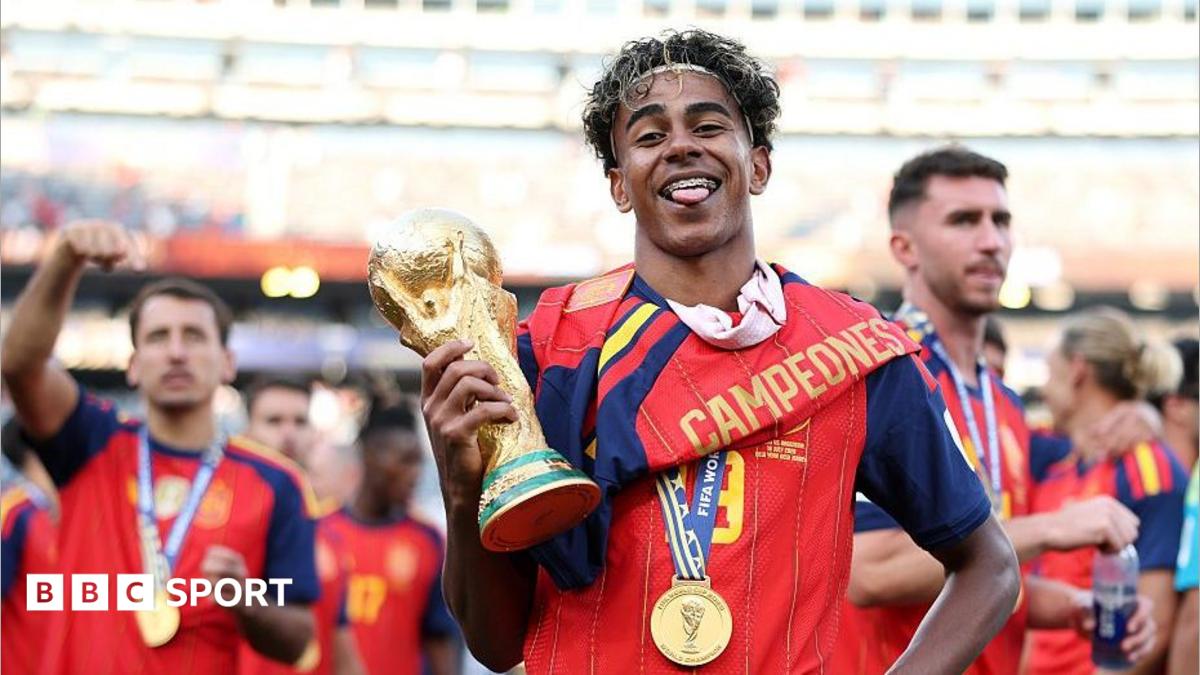
Spain has emerged as a powerhouse in men's football, holding the title of world champions, European champions, and Olympic champions, with an impressive unbeaten streak of 38 matches. This streak has persisted since their last loss to Colombia in a friendly match in 2024. In the last decade, Spain has won five of the ten major international tournaments.
Read More
Spain's success is not limited to the senior team; the country has also seen victories in six Under-19 European Championships, three Under-21 European Championships, and the Women's World Cup in 2023. Spanish clubs have dominated European competitions, securing half of all Champions League and Europa League titles since 2009.
Guillem Balague, a football expert, attributes Spain's thriving coaching culture to three main pillars. The first is the university education in physical education, notably the National Institute of Physical Education, which has been evolving since the 1990s to enhance the quality of football coaching. This foundation has produced renowned managers like Rafa Benitez and Marcelino Garcia Toral.
The second pillar of Spain's football success is the Basque culture, known for its strong work ethic and commitment. The Basque Country historically plays a significant role in shaping Spanish football's character.
The third pillar is the influence of FC Barcelona, particularly through Johan Cruyff's tactical innovations. Under Cruyff and later Pep Guardiola, Barcelona popularized a style of play that emphasized possession and tactical awareness. This approach was evident when eight players from Barcelona’s La Masia academy contributed to Spain’s World Cup triumph in 2010 and again in this year's tournament.
Jordi Gratacos, Barcelona's international director of academies from 2009 to 2011 and again from 2016 to 2020, emphasized the importance of tactical understanding in player development. He noted the necessity for players to make intelligent decisions on the field.
Hansi Flick, the current Barcelona manager, is following in Guardiola's footsteps, focusing on developing academy players, including Lamine Yamal and Dani Olmo, who are now integral to both the club and national team.
Spain's football successes are intertwined with the Basque influence. In the 2026 World Cup squad, five players hailed from Basque clubs, contributing notably to Spain’s triumphs at Euro 2024 and beyond. Mikel Merino, a prominent player from the Navarre region, recently scored the decisive goal against Germany in the Euro quarter-finals and has been impactful in World Cup qualifying.
Cesar Azpilicueta, a former Chelsea captain, describes Basque culture as one of discipline and resilience, which has shaped the playing style of these athletes, distinguishing them from the more physical style commonly associated with English football.
Spain's current squad, led by coach Luis de la Fuente, has seen players like Unai Simon and Aymeric Laporte form a solid foundation in defense, while Nico Williams played a pivotal role in the final match against Argentina. The impact of Basque players extends beyond the pitch, with Basque coaches now leading several top clubs in England, including Arsenal, Aston Villa, Chelsea, and Liverpool.