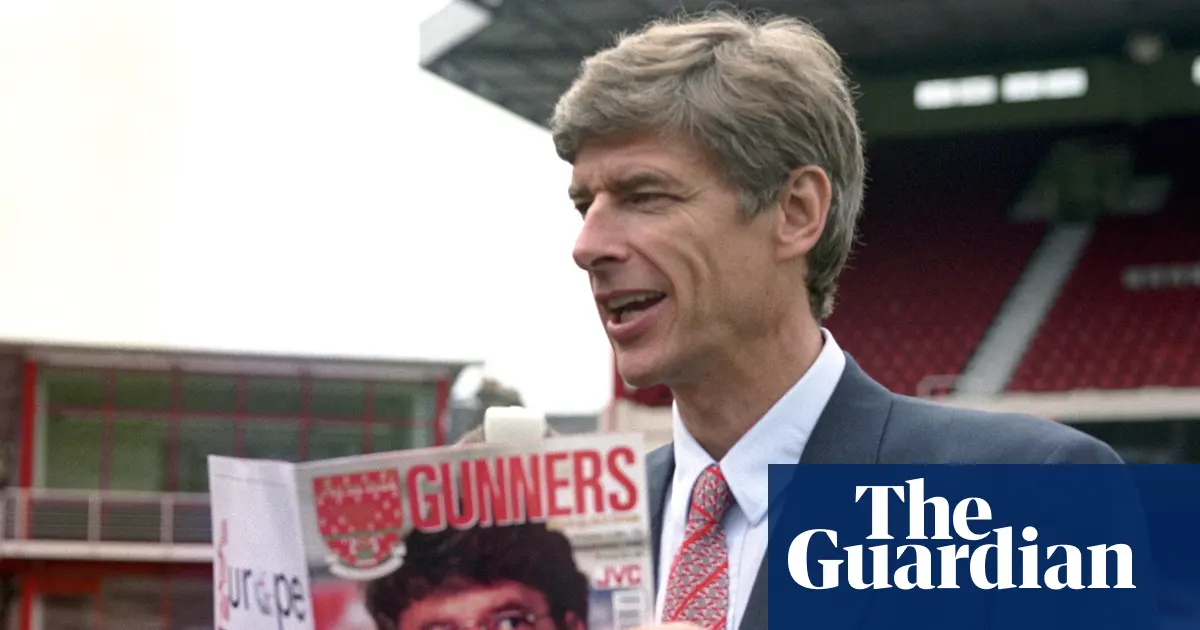
Thirty years ago, Arsenal’s management was in disarray after the sacking of Bruce Rioch, with interim managers Stewart Houston and Pat Rice filling the void. Amid speculation about Johan Cruyff’s appointment, vice-chair David Dein sought to quell uncertainty by introducing a new manager. "His name is Arsène Wenger," Dein announced, eliciting disbelief from players, with one famously responding, "Who the fuck is he?" The London Evening Standard’s headline, "Arsene Who?" mirrored the skepticism surrounding Wenger’s confirmation as manager on September 30, 1996.
Read More
Wenger's appointment would prove monumental for English football, demonstrating that foreign managers could succeed in the Premier League and initiating an era of multiculturalism that helped shape the globalized league we see today. When Wenger took over, he described Arsenal’s locker room as “culturally English” and made his first signings: the relatively unknown French players Patrick Vieira and Rémi Garde. By the time he left in 2018, the Premier League had evolved into a diverse environment.
He was a pioneer, paving the way for other foreign managers like Gérard Houllier and Rafael Benítez, and influencing teams like Tottenham, which experimented with coaching methods due to Wenger's innovative approach.
Wenger's timing coincided with larger cultural shifts in the UK, including increasing European Union migration and the influx of television revenue reshaping the sport. The first non-British manager in the Premier League was Dr. Jozef Venglos at Aston Villa in 1990, but he struggled. Wenger seemed to fit the mold of a misunderstood foreign coach, yet he would defy the odds.
His players initially viewed him with skepticism, with Sir Alex Ferguson deriding him as someone ignorant of the English game. However, even critics acknowledged Wenger's substantial impact, with Neil Warnock stating, "Wenger changed the whole course of [English] football” by influencing his peers to adapt to modern advances in nutrition and fitness.
Wenger’s playing philosophy shone through as he secured his first Premier League title in 1998, known for his Total Football style, epitomized by a goal against Everton that showcased teamwork and precision. Wenger maintained an English core in his squad while incorporating talent like Thierry Henry and Robert Pires, leading to legendary achievements including the Invincibles.
Nutrition and fitness were significant changes brought by Wenger. His collaboration with Dr. Yann Rougier represented a shift in training approaches, which were met with skepticism by established figures like Ferguson. Despite resistance, Wenger's methods became standard practice, transforming players’ diets and fitness routines.
The Invincibles completed the 2003-04 season unbeaten, a feat that solidified Wenger's legacy. His holistic approach and analytical use of statistics were groundbreaking, establishing protocols that have become commonplace in modern football, surpassing even Ferguson in some respects.
While Wenger’s achievements may not fully match Ferguson’s in terms of trophies, his influence on the game is undeniable. When Wenger departed Arsenal, Ferguson reflected on their rivalry, acknowledging him as one of the greatest Premier League managers. Thirty years after his appointment, Arsène Wenger's transformative influence on English football continues to resonate.