Italian football is currently facing significant challenges, with this year marking a low point for the sport in the country. No Italian club advanced past the quarter-finals in European competitions, and only Atalanta reached the Champions League last 16. Most notably, the Italian national team failed to qualify for the World Cup for the third consecutive time, an unthinkable outcome for a nation that has won the tournament four times.
Read More
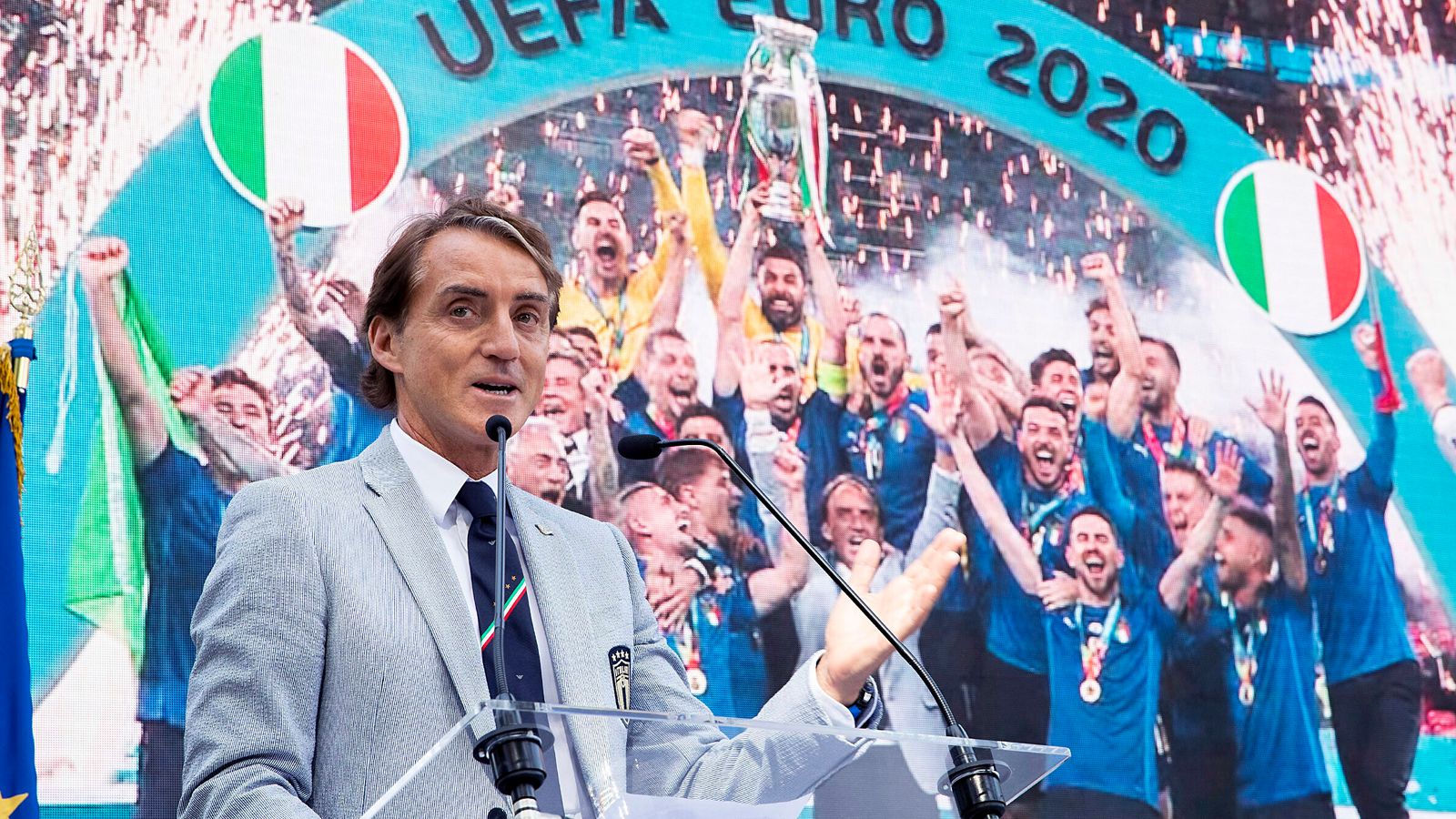
The initial setbacks were somewhat softened by Italy's victory in Euro 2020 at Wembley, which provided a glimmer of hope. However, the disappointment of missing out on the latest World Cup, which will feature 48 teams, led to the resignations of key figures including head coach Gennaro Gattuso, Italian FA president Gabriele Gravina, and Gianluigi Buffon as head of delegation.
Italy captain Gianluigi Donnarumma expressed the emotional weight of such repeated failures, stating that not qualifying for three consecutive World Cups is a tough pill to swallow, adding that Italy "doesn't deserve that."
In response to this crisis, Italy has appointed Roberto Mancini as head coach for a second term. Mancini previously led the national team to victory in the Euros five years ago. Donnarumma emphasized that the team's focus now must be on working hard to regain Italy's stature in football.
Italy's recent footballing history has been marked by a decline since their last World Cup triumph in 2006, with their last knockout stage match occurring at the 2006 tournament. The team's struggles have been compounded by an inability to cultivate a new generation of world-class talent, particularly following the retirements of players like Giorgio Chiellini and Leonardo Bonucci.
Research from the CIES Football Observatory revealed that between 2020 and 2025, Italy produced only 413 football exports, falling behind countries such as the United States, Japan, and Russia. In contrast, other nations in Europe's top leagues produced over 1,000 players. This lack of emerging talent is reflected in the national team, with only one capped player under 24 making an appearance between June 2025 and February 2026.
In 2025, Italy allocated just 1.9 percent of Serie A minutes to players under 21, ranking it among the lowest globally. The aging player roster has contributed to a decline in Serie A competitiveness, with many notable players joining teams outside of Italy.
Despite these challenges, there are signs of a potential resurgence. Mancini's first squad announcement included nine uncapped players and eleven under the age of 23. Promising talents like Borussia Dortmund's 18-year-old Samuele Inacio and Chelsea-bound Honest Ahanor are among those leading a new wave of Italian footballers.
Donnarumma sees a mix of established and young players as crucial for the team's success moving forward. Italy's Nations League group features strong opponents like Belgium, Turkey, and France, but optimism remains as the nation seeks to reclaim its place atop global football. The team needs just one spark to ignite its revival.