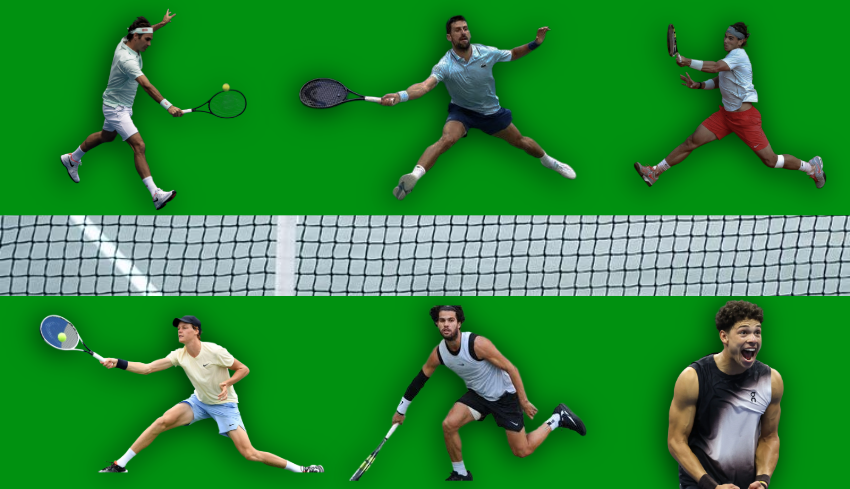
Men’s tennis, long dominated by Roger Federer, Rafael Nadal, and Novak Djokovic, is experiencing a notable shift as the sport enters a new era. As of the 2026 U.S. Open, the Big Three no longer command the same level of attention or success, with only Djokovic still actively competing. Federer and Nadal have stepped away from the sport, underscoring the challenges of maintaining dominance at an older age.
Read More
The emerging players, including Carlos Alcaraz, Jannik Sinner, and Alexander Zverev, are beginning to shape the future of tennis. Alcaraz and Sinner have become prominent figures, contending for major titles. However, Sinner withdrew from the 2026 U.S. Open due to a knee injury, while Alcaraz was returning from a four-month layoff due to a wrist injury that also kept him from competing at Wimbledon 2026.
Charlotte Weidner, a sophomore business major, noted that the younger players have a significant advantage due to their age and growing skills. She remarked that while the Big Three are iconic, they are not performing at the same level as before.
Even in Sinner's absence, Alcaraz had a noteworthy presence, entering the tournament as the defending champion. Prior to his injury, he had won the Australian Open in 2026, making history as the youngest male player to complete a career Grand Slam. Alcaraz reached the quarterfinals at the U.S. Open but was defeated by American Ben Shelton in a match that lasted over four hours, marking the latest finish in the tournament's history.
Zverev, although older than Alcaraz and Sinner at 29, is also part of this transition phase in men's tennis. He reached the 2026 U.S. Open as the top seed and claimed his second Grand Slam title of the season.
Health sciences major Noelle Barnhart mentioned that the game has become more exciting and unpredictable due to the presence of multiple contenders, unlike the previous era dominated by a single player.
Fans had long been accustomed to the fierce rivalry among Federer, Nadal, and Djokovic. Their unique styles and personalities provided diverse reasons for fans to engage with the sport. The next generation must now establish their own identities. Alcaraz has the potential to be a major star, while Sinner’s impressive statistics reflect his consistent performance.
Other emerging talents, such as Shelton and Frances Tiafoe, along with Rafael Jodar, who won his first ATP title this year, contribute to this evolving landscape of competitive tennis. This broader talent pool raises questions about whether Alcaraz or Sinner can match the Grand Slam success of the Big Three, suggesting a shift toward parity in the sport.
Ava Gonzalez, a junior psychology major, emphasized that while she was not an avid tennis fan, she was aware of the Big Three and their cultural impact. The new generation of players now faces the challenge of making their own mark while competing against the legacies of tennis icons.
Alcaraz is well-positioned to become the new face of men’s tennis, already having accrued significant achievements. Meanwhile, Sinner, Zverev, Shelton, Tiafoe, and Jodar are also positioned to influence the sport's future.
As the Big Three gradually move to the background, the sport stands on the brink of transformative change. While the younger generation may not replace the Big Three, they have the opportunity to forge their own legacy in the years to come.